Cubic Sub Font Embroidery Design: A Strategic Approach to Textile Branding
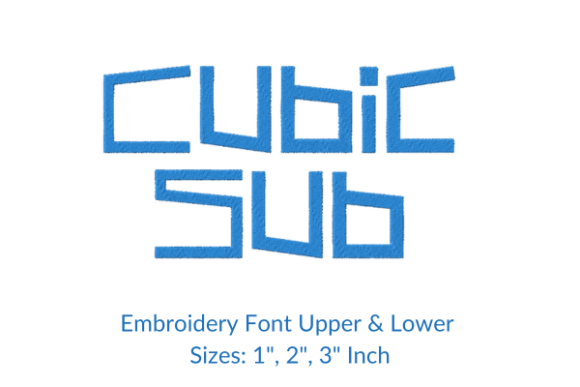
In the competitive landscape of textile customization, the choice of typography is rarely just an aesthetic decision; it is a strategic one. The Cubic Sub Font Embroidery Design represents a specific intersection of geometric precision and functional utility. Unlike decorative scripts that prioritize flair over legibility, this font offers a structured, block-based approach that communicates stability and modernity. For entrepreneurs, small business owners, and professional embroiderers, understanding how to leverage the Cubic Sub Font Embroidery Design can significantly impact brand perception, operational efficiency, and customer satisfaction.
This design set is not merely a collection of letters; it is a tool for personalization that allows you to write names, dates, or quotes on any fabric with clarity. However, the true value lies in knowing when and how to deploy these assets to achieve specific outcomes. Whether you are producing monogrammed corporate gifts, customizing athletic apparel, or creating limited-edition fashion pieces, the strategic application of this font determines the quality of the final product.
The Strategic Value of Geometric Typography in Embroidery
Typography in embroidery serves as the primary vehicle for communication. When a client receives a garment with their name or a company logo, the text is often the first element they read. The Cubic Sub Font Embroidery Design provides a high-quality, geometric alternative to standard serif or sans-serif fonts. Its cubic structure ensures that characters maintain their integrity even at smaller sizes, reducing the risk of thread breakage or blurred details that often plague overly complex designs.
From a branding perspective, this font conveys a sense of order and reliability. It is particularly effective for industries where precision is paramount, such as healthcare, technology, or logistics. Using the Cubic Sub Font Embroidery Design on uniforms or promotional items signals a commitment to professionalism. Conversely, for lifestyle brands seeking a retro-modern aesthetic, the bold lines of the font can serve as a distinctive visual anchor that separates the product from generic competitors.
The versatility of this design extends beyond simple aesthetics. Because the font is engineered for machine embroidery, it supports consistent stitch density and direction. This consistency is crucial for maintaining production standards across large batches. When you choose a font that performs reliably under machine tension, you reduce waste, minimize rework, and ensure that every item leaving your facility meets the same high standard of quality.
Optimizing Dimensions and Stitch Efficiency
A critical aspect of using the Cubic Sub Font Embroidery Design effectively is understanding its dimensional constraints and capabilities. The technical specifications provided for the letter "A" (both uppercase and lowercase) serve as a baseline summary, but they do not tell the whole story. Each character in the 156-letter set possesses unique stitch counts and dimensions that must be considered during the planning phase.
Before committing to a design layout, it is essential to review the full dimension details available in the More Sewing Info PDF. Relying solely on the summary data for "A" and "a" can lead to miscalculations in hooping space or thread consumption. For instance, while the letter "A" may fit comfortably within a 4x4 inch hoop, wider characters like "W" or "M" might require a larger area or a different arrangement to prevent crowding.
Strategic planning involves mapping out the entire phrase before digitizing or stitching. Consider the following factors:
- Stitch Count Variance: Some letters in the Cubic Sub set will naturally have higher stitch counts due to their width. Balancing these with narrower letters ensures an even distribution of thread usage.
- Fabric Tension: Geometric fonts often require stable backing. Understanding the stitch density helps in selecting the appropriate stabilizer to prevent puckering.
- Hoop Size Constraints: If you are working with a compact machine, knowing the exact width of each character prevents the need for manual resizing, which can distort the cubic geometry.
By treating the font data as a variable in your production equation rather than a static asset, you can optimize your workflow and reduce the likelihood of errors during the sewing process.
Integrating Multi-Format Compatibility into Your Workflow
One of the most significant advantages of the Cubic Sub Font Embroidery Design is its compatibility with multiple embroidery file formats. In a professional setting, flexibility is synonymous with resilience. Different clients, different machines, and different software ecosystems require different file types. A font package that locks you into a single format creates a bottleneck in your operations.
Having access to various formats means you can seamlessly integrate this font into diverse production environments. Whether you are using a Brother, Bernina, Janome, or Tajima machine, the ability to switch file formats without losing design fidelity is a substantial operational benefit. This flexibility supports scalability. As your business grows and you invest in new machinery, your existing library of designs remains usable, protecting your initial investment.
Furthermore, multi-format support enhances collaboration. If you work with external designers or subcontractors who use different software, being able to share files in a universally compatible format streamlines communication. It eliminates the friction of conversion errors and ensures that the vision you have for the Cubic Sub Font Embroidery Design is executed exactly as intended by the end user.
Risks of Unintentional Application
While the Cubic Sub Font Embroidery Design offers numerous benefits, it is not a universal solution for every project. Using this font without a clear strategic goal can lead to mismatched aesthetics and wasted resources. For example, applying a bold, cubic font to delicate lace or sheer fabrics may overwhelm the material, causing structural damage or visual clutter. Similarly, using this font for romantic or whimsical themes might clash with the desired emotional tone of the piece.
The risk also lies in assuming that the font requires no customization. While the design is high-quality, every fabric behaves differently. Blindly stitching the default settings onto a thick denim jacket versus a thin cotton shirt without adjusting stabilizers or thread tension can result in poor outcomes. Decision-makers must evaluate the context of each project before deploying the font.
Additionally, there is the risk of overuse. If every item in your catalog features the same geometric typeface, your brand may begin to feel repetitive. Variety is key to keeping a portfolio fresh. The Cubic Sub Font Embroidery Design should be part of a broader toolkit, used intentionally to highlight specific messages or products rather than applied indiscriminately.
Practical Use Cases and Decision-Making Frameworks
To maximize the return on investment for this design, consider the following practical applications where the Cubic Sub Font Embroidery Design excels:
- Corporate Uniforms and Name Tags: The clarity of the cubic structure makes it ideal for identification purposes. Names and titles are easily readable from a distance, enhancing safety and professionalism in workplaces.
- Sports Team Apparel: Numbers and player names on jerseys require durability and visibility. This font's robust stitch pattern holds up well against washing and wear, making it a reliable choice for athletic gear.
- Event Memorabilia: For conferences, weddings, or galas, dates and event names embroidered in this style convey a modern, sophisticated look. It works particularly well on caps, tote bags, and pocket squares.
- Small Business Branding: Startups looking to establish a strong identity can use this font on merchandise to project a solid, grounded image. It is especially effective for tech startups, construction firms, and architectural studios.
When deciding whether to use this font for a specific project, ask yourself three questions:
- Does the geometric style align with the brand's core values?
- Is the fabric suitable for the stitch density required by this font?
- Will the size of the text remain legible after accounting for fabric stretch and shrinkage?
Answering these questions ensures that the Cubic Sub Font Embroidery Design is used as a deliberate tool for achieving business objectives rather than a random decorative choice.
Long-Term Planning and Creative Growth
Investing in high-quality digital assets like the Cubic Sub Font Embroidery Design is a long-term strategy. These designs become part of your intellectual property and creative repertoire. Over time, mastering the nuances of this font—understanding how it interacts with different threads, backings, and fabrics—builds your expertise as an embroiderer or designer.
As you gain experience, you can experiment with combining this font with other elements, such as logos, icons, or background textures. The clean lines of the cubic font provide a neutral yet strong foundation that complements a wide range of graphic styles. This adaptability allows your business to evolve without constantly reinventing the wheel.
Moreover, offering a specialized font like this can differentiate your services in a crowded market. Clients appreciate professionals who understand the technicalities of their craft and can recommend the right tools for the job. By positioning yourself as an expert in utilizing the Cubic Sub Font Embroidery Design effectively, you build trust and authority with your customers.
Ultimately, the success of any embroidery project depends on the harmony between design intent and execution. The Cubic Sub Font Embroidery Design provides the necessary framework for this harmony, offering a blend of style, functionality, and technical reliability. By approaching its use with strategic foresight and attention to detail, you can transform simple text into a powerful statement of identity and quality.